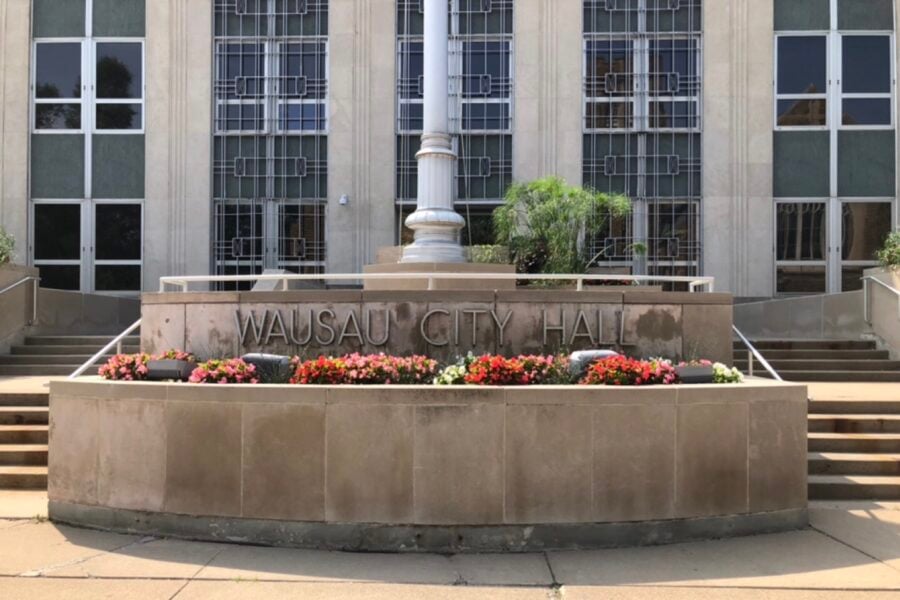
Image: Wausau Pilot & Review
The Wausau committee weighing the Wangard riverfront agreement this week isn't just debating blueprints and timelines; they're grappling with financial projections and safeguard thresholds that, as the Wausau Pilot & Review reports, sit above the developer’s own estimates. For any local business owner, this discrepancy immediately raises a critical question: how secure are the numbers guiding such a significant Wausau development?
For a 40-person construction firm in central Wisconsin, this isn't just abstract city politics. Every bid, every contractor agreement, every financial projection you submit or receive for a project of this scale contains proprietary, sensitive information. If the very projections guiding a multi-million dollar riverfront project are under scrutiny, it underscores the intense need for robust cybersecurity to protect your financial data and intellectual property in a complex, multi-stakeholder environment. It's not enough to build strong structures; we must also secure the digital foundations they rest upon.
The Integrity of Project Finance: More Than Just Spreadsheets
Large-scale construction projects like the Wausau riverfront are a nexus of financial data: feasibility studies, cost estimates, funding agreements, contractor bids, and long-term revenue projections. When a safeguard threshold exceeds a developer's own projections, it signals either a conservative approach to risk, or perhaps, differing interpretations of complex financial models. In either case, the integrity and confidentiality of these figures are paramount. Any compromise could expose sensitive strategic information, undermine trust, or even lead to financial losses.
I often advise clients to think of project finance data as intellectual property. Protecting it requires more than just password-protected Excel files. Tools like Microsoft Purview for data governance can classify and protect sensitive documents across various platforms, ensuring that only authorized individuals can access, edit, or share critical financial models. Without such controls, the very numbers guiding a city's future could be vulnerable to misinterpretation, manipulation, or accidental disclosure.
Construction's Cybersecurity Blind Spots
Historically, the construction industry hasn't always been at the forefront of cybersecurity adoption, often prioritizing physical site security over digital defenses. However, as projects become more digitally integrated – from BIM (Building Information Modeling) to IoT sensors on equipment – the attack surface expands dramatically. This lag makes construction firms attractive targets for cybercriminals seeking valuable financial data, contractual agreements, or even intellectual property related to innovative building techniques.
A recent IBM Cost of a Data Breach Report 2023 estimated the average cost of a data breach in the industrial sector, which includes construction, at $4.76 million. This figure highlights the severe financial repercussions that can arise from inadequate security. Imagine an HVAC subcontractor's bids being intercepted and altered, or a general contractor's financial models for an entire development being leaked. These aren't just hypothetical scenarios; they are tangible risks that can cripple a project and damage reputations.
Safeguarding Collaborative Data in Wausau Projects
The Wausau riverfront project involves numerous stakeholders: the city, the developer, lenders, architects, engineers, and countless subcontractors. Each party contributes and accesses a trove of sensitive data, often through shared platforms. This multi-party collaboration creates complex security challenges. How do you ensure that a small landscaping firm has access only to relevant site plans, while the lead developer maintains control over master financial projections?
Robust project management software, such as Procore or Autodesk Construction Cloud, offers specialized modules designed for the construction industry. However, their effectiveness hinges on proper configuration and ongoing management of security features. Implementing strict role-based access control (RBAC), ensuring audit trails are meticulously maintained, and mandating strong encryption for all data at rest and in transit are crucial steps. Furthermore, adopting frameworks like ISO 27001 for information security management can provide a structured approach to managing security risks across all project phases and participants.
Beyond the Blueprint: What to Do on Monday
For any Wisconsin business involved in large development or construction projects, taking proactive steps to bolster your cybersecurity posture is non-negotiable. Here are concrete actions you can implement this week:
- Mandate Multi-Factor Authentication (MFA): Require MFA for all accounts accessing project management platforms, financial systems, and email. This simple step significantly reduces the risk of unauthorized access due to stolen credentials.
- Conduct a Vendor Security Review: If you're sharing data with partners, ask them about their security practices. Ensure they meet your standards for data protection and sign appropriate data processing agreements.
- Encrypt Sensitive Documents: Implement encryption for all financial models, contracts, and proprietary project data, both when it's stored on your servers or in the cloud (at rest) and when it's being transmitted (in transit).
- Review Data Retention Policies: Understand what project data you need to keep, for how long, and how it should be securely disposed of once its retention period expires. Minimize your data footprint to reduce risk.
- Regular Security Awareness Training: Educate your team on phishing, social engineering, and the importance of secure data handling, specifically tailored to the types of information they encounter in construction projects.
The scrutiny around Wausau's riverfront agreement underscores that every detail, especially the financial ones, carries weight. For local businesses, this is a reminder that the digital integrity of our projects is just as vital as their physical construction. Proactive cybersecurity isn't just good practice; it's essential for protecting your firm's future and contributing to the secure development of our community.
If you're a Wausau or central Wisconsin business navigating the complexities of project data security, I can help you implement robust protections tailored to your specific needs. Reach out to my firm today to discuss how we can safeguard your most valuable information. Explore my services or contact me directly.
If you want to read more, check out the original article.

20+ years in IT systems, automation, and full-stack development. Learn more →