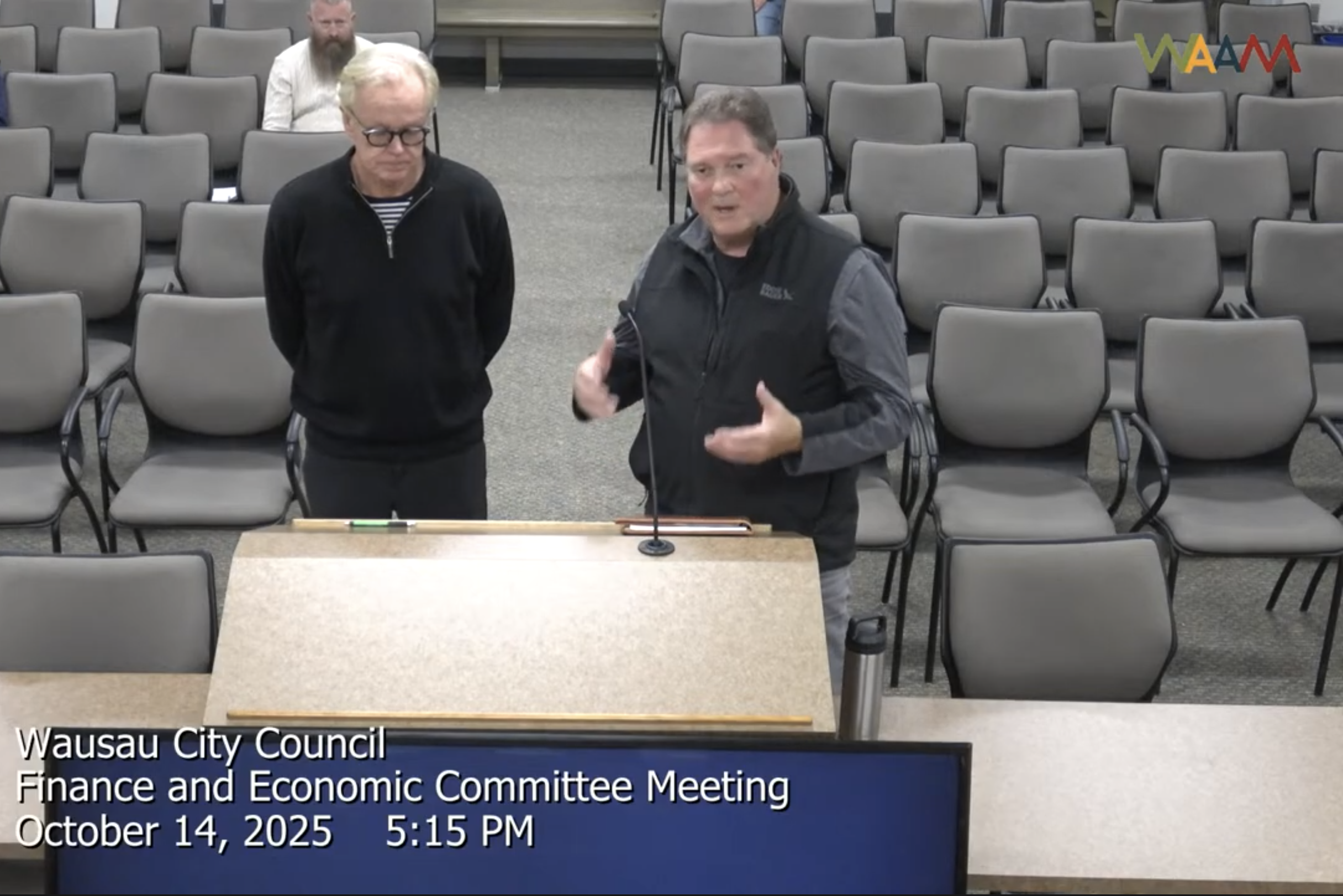
Image: Wausau Pilot & Review
When a developer asks Wausau taxpayers for nearly $1 million to cover cost overruns, it signals a failure in original project estimation rather than just a market shift. For a 40-person firm in central Wisconsin, this isn't just local politics; it’s a warning about how you manage your internal CAPEX projects when the initial budget starts to drift.
If you are managing a $500,000 enterprise software rollout or a physical facility expansion, the primary lesson from the downtown proposal is that scope creep is often hidden in the 'finishing' stages. When your vendors start asking for additional capital mid-cycle, your business—much like the city council—is suddenly in a position of high vulnerability where the 'sunk cost fallacy' takes over. If you have already spent $400,000, it feels easier to authorize another $100,000 than to admit the original projection was flawed.
The Cost of Inaccurate Estimation
According to the Project Management Institute’s 2023 Pulse of the Profession report, roughly 34% of projects fail to meet their original goals because of poor requirement gathering and inadequate budget estimation. When I look at the downtown funding request reported by the Wausau Pilot & Review, I see a classic mismatch between project feasibility and stakeholder expectation. In my two decades of IT consulting, I’ve seen this play out with custom software builds where the feature set expands without a corresponding adjustment to the timeline or the budget.
Applying the 'Minimum Viable' Mindset
Instead of seeking more taxpayer funds, a private business in a similar position should pivot to a Minimum Viable Product (MVP) approach. If your construction or software project is over budget, stop the bleeding. Break the remaining work into components that generate actual ROI. For example, if you are building an internal inventory portal, don't demand full integration with legacy ERP systems like SAP or Microsoft Dynamics 365 on day one. Deliver the core tracking module first. According to a McKinsey study, large IT projects often overrun budgets by 45% while delivering 56% less value than predicted. By narrowing your scope, you prevent the 'million-dollar request' scenario entirely.
Technical Oversight and Real-World KPIs
When you handle high-stakes projects, you need to implement hard gates in your project management software. If you are using Jira or Monday.com, stop treating them as simple task trackers. Use them to manage 'burn-down' charts that display actual spending versus planned value. If the chart line deviates by more than 10%, that is your trigger to stop work and conduct a root-cause analysis. Do not rely on verbal promises from contractors or internal project leads. Require automated reporting that pulls data directly from your accounting API or project repository to ensure you are seeing reality, not someone's optimistic projection.
Monday Morning Action Plan
If you are currently overseeing a project that feels like it’s drifting toward a budget crisis, do these three things Monday morning. First, audit your current 'must-have' feature list. Categorize every item as either 'Critical for Operation' or 'Nice to Have.' Eliminate all 'Nice to Haves' immediately. Second, review your contract language. If you are using standard T&M (Time and Materials) agreements, talk to your legal counsel about shifting to a 'Fixed Price/Fixed Scope' model for the next phase of the project to cap your risk. Third, schedule a 30-minute meeting with your lead stakeholders to align on the 'Drop Dead' date—the moment where the project either delivers its core utility or gets mothballed.
Maintaining Fiscal Resilience
Wausau businesses have a unique advantage: we value pragmatism. We shouldn't be afraid to pull the plug on a project that no longer makes financial sense. By treating capital expenditure with the same scrutiny we apply to our daily operations, we avoid the traps that often ensnare public-private partnerships. My approach has always been to build in small, measurable increments that show progress without requiring constant infusions of capital. If a project is worth doing, it should demonstrate value well before it exhausts the reserve fund.
I help businesses navigate these complex infrastructure and software decisions every day. If you want to refine your project oversight or need a second opinion on your current tech roadmaps, reach out to me here to discuss your specific situation. You can also view my full list of services to see how I help local firms optimize their long-term growth.
If you want to read more, check out the original article.

20+ years in IT systems, automation, and full-stack development. Learn more →