Image: WAOW
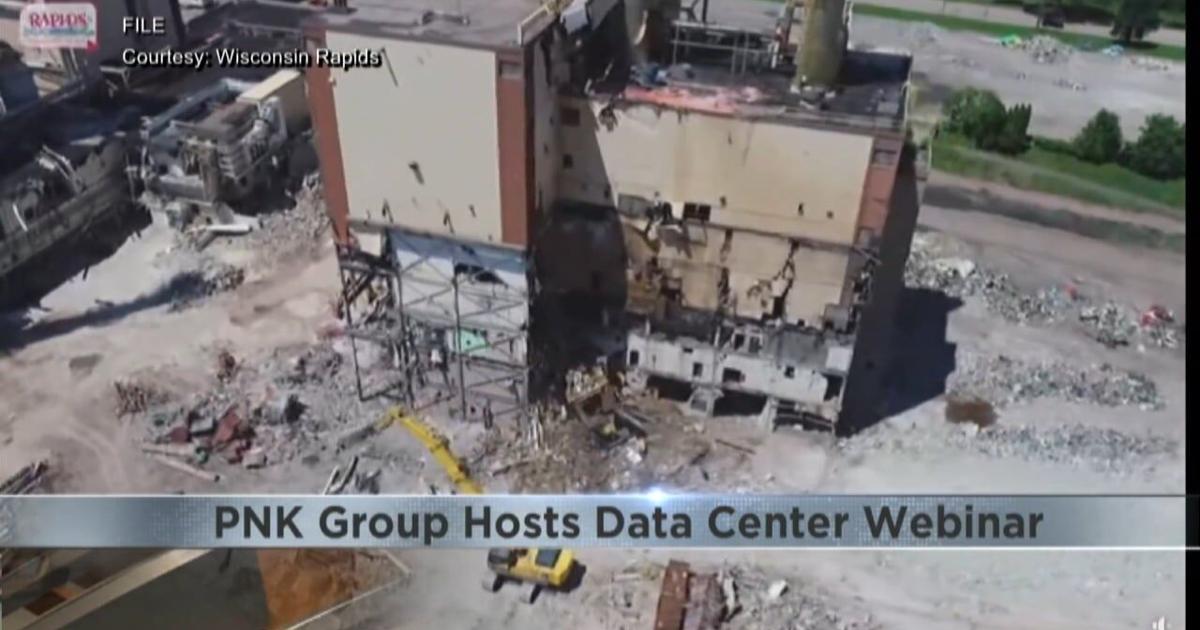
Hearing that PNK Group is hosting data center webinars for Wisconsin Rapids is more than just regional news; it’s a direct prompt for every central Wisconsin operation to re-evaluate where and how their critical applications run. For a 40-person company in Wausau, this isn't about building your own massive server farm. It's about a crucial decision this week: are your essential applications running optimally for your specific needs, or are you just defaulting to a one-size-fits-all solution? The local discussion around data centers highlights that not every workload belongs in a distant public cloud, especially when immediate response and local processing are paramount.
Why Local Data Center Talk Matters for Wausau Agriculture
When I see news about local data center discussions, my mind immediately jumps to industries that depend heavily on real-time, localized processing – and in Wisconsin, that often means agriculture. Modern farming, from dairy to crops, is increasingly reliant on technology that generates enormous amounts of information. Think about smart irrigation systems adjusting water flow based on hyper-local weather sensors, or autonomous tractors needing instantaneous guidance corrections. Shipping all that raw information to a public cloud provider hundreds or thousands of miles away, processing it, and waiting for the instructions to come back introduces latency that can cost precious time and resources.
For a Wisconsin farm, where timely decisions about planting, feeding, or harvesting can directly affect yield and profitability, the ability to process applications closer to the source of the information is a significant advantage. It's not just about speed; it's about control over sensitive operational parameters and ensuring applications for critical farm machinery remain responsive even with intermittent internet connectivity, which is still a reality in many rural areas.
Cultivating Efficiency: An Ag-Tech Example
Consider a hypothetical 500-head dairy farm just outside Wausau. They've invested in automated milking parlors, individual cow health monitors, and feed management systems. Each sensor on every cow generates a constant stream of health, activity, and production information. The feed system adjusts rations based on these metrics in real-time. If the application managing this complex ecosystem sits entirely in a distant public cloud, any network hiccup could delay critical adjustments, impacting milk production or animal welfare.
This is where an edge or hybrid IT model shines. The farm could deploy a solution like Microsoft Azure Stack HCI on-premises. This brings Azure services, virtualization, and storage right to the farm, allowing core analytics and operational applications – perhaps built on container orchestration platforms like Kubernetes – to run locally. Only aggregated, less time-sensitive information needs to be sent to the cloud for long-term storage or broader trend analysis. This significantly reduces latency and ensures operational resilience. In fact, the global agricultural big information market is projected to reach $6.4 billion by 2028 (MarketsandMarkets, 2023), highlighting the growing need for robust, localized processing.
Application Development in a Hybrid IT World
The rise of edge computing and hybrid cloud models, often driven by needs similar to those of our Wisconsin dairy farm, fundamentally changes how we approach application development. Developers working on specialized agricultural software, for instance, must now consider deployment targets beyond just public cloud or traditional on-premises servers. They're thinking about creating applications that can seamlessly run across distributed environments, from a compact Azure Stack HCI cluster on a farm to a regional data center, and up to Azure's global network.
This means embracing Infrastructure as Code (IaC) tools like Terraform to provision and manage infrastructure consistently, regardless of location. It also means designing applications with containerization in mind, allowing them to be packaged once and deployed anywhere, and implementing robust CI/CD pipelines to automate releases to these diverse environments. The local data center conversation isn't just for infrastructure folks; it directly shapes the tools, architectures, and practices that modern developers use to build the next generation of industry-specific applications.
Your "Monday Morning" Data Center Check-up
So, what does this mean for you, a business owner in central Wisconsin, on Monday morning? It's time for a practical assessment of your current IT infrastructure. First, identify your most latency-sensitive or mission-critical applications. Which ones absolutely cannot afford a moment of downtime or delay? Second, evaluate your current network connectivity and its reliability for these applications. Are you constantly fighting bandwidth limitations or intermittent service?
Third, explore hybrid cloud solutions. For example, if you're already in the Microsoft ecosystem, understanding how Azure hybrid options can extend your public cloud capabilities to your local environment or even to an edge device can be a game-changer for application performance and resilience. Finally, don't try to solve this alone. I’ve spent over two decades helping Wisconsin organizations navigate these complex choices, from designing robust local infrastructure to optimizing cloud deployments. A brief discussion can clarify your options and outline concrete first steps tailored to your specific operations.
If these types of infrastructure decisions, application deployment strategies, or hybrid cloud integrations are on your mind, I’m here to help. Reach out to me directly or visit my services page to learn how I assist Wausau and central Wisconsin companies in making informed IT choices that genuinely drive progress.
If you want to read more, check out the original article.

20+ years in IT systems, automation, and full-stack development. Learn more →