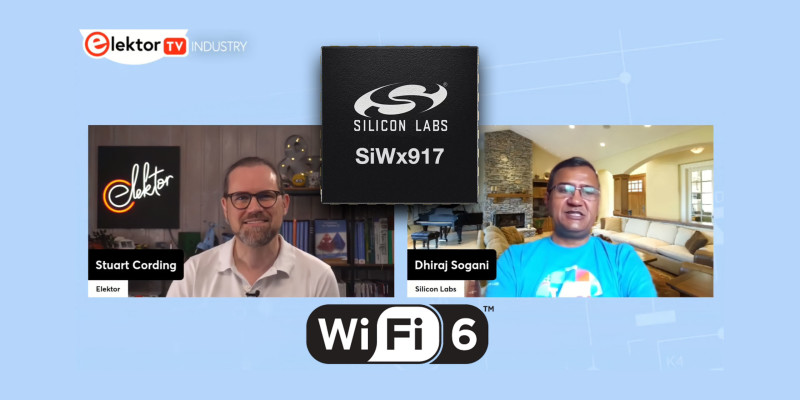
Image: Elektor Magazine
We often hear about the next big thing in tech, but sometimes the most impactful advancements are the ones quietly enabling the existing ones to run better. Take the world of the Internet of Things (IoT) – those countless sensors, smart devices, and connected gadgets that are increasingly woven into the fabric of our businesses, from Wausau’s manufacturing floors to our remote agricultural operations. While AI and cloud get the headlines, the humble Wi-Fi chip is undergoing a crucial evolution that’s worth paying attention to.
The Silent Drain: Power Consumption in IoT
For years, one of the biggest hurdles in deploying widespread IoT solutions has been power consumption. Many IoT devices are battery-operated, and if they’re constantly polling for connections or transmitting data inefficiently, those batteries drain quickly. This leads to frequent maintenance, higher operational costs, and a less reliable system overall. Think about a network of temperature sensors in a large food storage facility in Wisconsin – if each sensor’s battery dies every few months, you’re looking at a significant logistical challenge to replace them all. This isn't a hypothetical; it's a real operational headache that impacts efficiency and can even lead to product spoilage if critical monitoring fails.
Enter Wi-Fi 6 and the SiWx917
This is where new developments like Silicon Labs’ SiWx917 chip, as detailed in Elektor Magazine, become incredibly relevant. It’s designed to leverage the benefits of Wi-Fi 6, but with a critical focus on low power consumption. Wi-Fi 6 (also known as 802.11ax) brings improvements in speed and efficiency, but the SiWx917 takes this a step further for IoT applications. It incorporates features specifically aimed at reducing the energy footprint of these devices, allowing them to run for much longer on a single battery charge. This isn’t just about convenience; it’s about enabling entirely new use cases that were previously impractical due to power constraints.
What Low-Power Wi-Fi 6 Means for Wisconsin Businesses
So, what does this mean for businesses here in Wausau and across Wisconsin? Imagine deploying a fleet of environmental sensors across a large agricultural spread for precision farming, monitoring soil moisture, temperature, and nutrient levels without needing to run power cables to each one. These sensors could operate for years. Or consider smart manufacturing, where a multitude of small sensors can monitor machine health, vibration, and temperature, feeding data back to a central system for predictive maintenance. The reduced power draw means these sensors can be strategically placed even in hard-to-reach areas, providing a more comprehensive picture of operations. This translates directly into reduced maintenance costs and more robust data collection, which are vital for any business looking to stay competitive.
A Real-World Scenario: Smart Inventory Tracking
Let’s look at a practical example. A mid-sized retail operation in Wisconsin could implement a system of low-power Wi-Fi 6 tags on high-value inventory. These tags could continuously report their location within the store or warehouse, providing real-time inventory counts without constant manual scanning. Unlike older RFID or Bluetooth solutions that might have limited range or require frequent battery changes, these Wi-Fi 6 enabled tags could achieve longer battery life and better network penetration. This improved visibility helps prevent stockouts, reduces shrinkage, and streamlines the entire inventory management process, ultimately impacting the bottom line.
The Underlying Technology and Its Impact
The SiWx917 leverages technologies like Target Wake Time (TWT), a feature within Wi-Fi 6 that allows devices to schedule when they wake up to transmit and receive data. This means devices can spend more time in a low-power sleep state, significantly conserving energy. For developers and IT professionals, this offers a more reliable foundation for building connected solutions. It means we can focus less on the immediate challenge of battery replacement and more on the data and insights these devices can provide. It’s about making IoT practical, scalable, and cost-effective for a wider range of applications.
Looking Ahead: A Connected Future
The evolution of connectivity hardware like the SiWx917 is a crucial, albeit less glamorous, component of technological advancement. As more businesses in Wausau and throughout Wisconsin embrace IoT, the underlying infrastructure needs to become more efficient and sustainable. Low-power Wi-Fi 6 is a significant step in that direction, promising a future where connected devices are not only smarter but also more enduring and less demanding on resources. This foundational shift is essential for unlocking the full potential of the connected world for all types of enterprises.
Understanding these advancements is key to leveraging them. If you're exploring how to enhance your business's operational efficiency with IoT solutions, let's talk. You can learn more about how we can help at our services or reach out directly via our contact page.

20+ years in IT systems, automation, and full-stack development. Learn more →