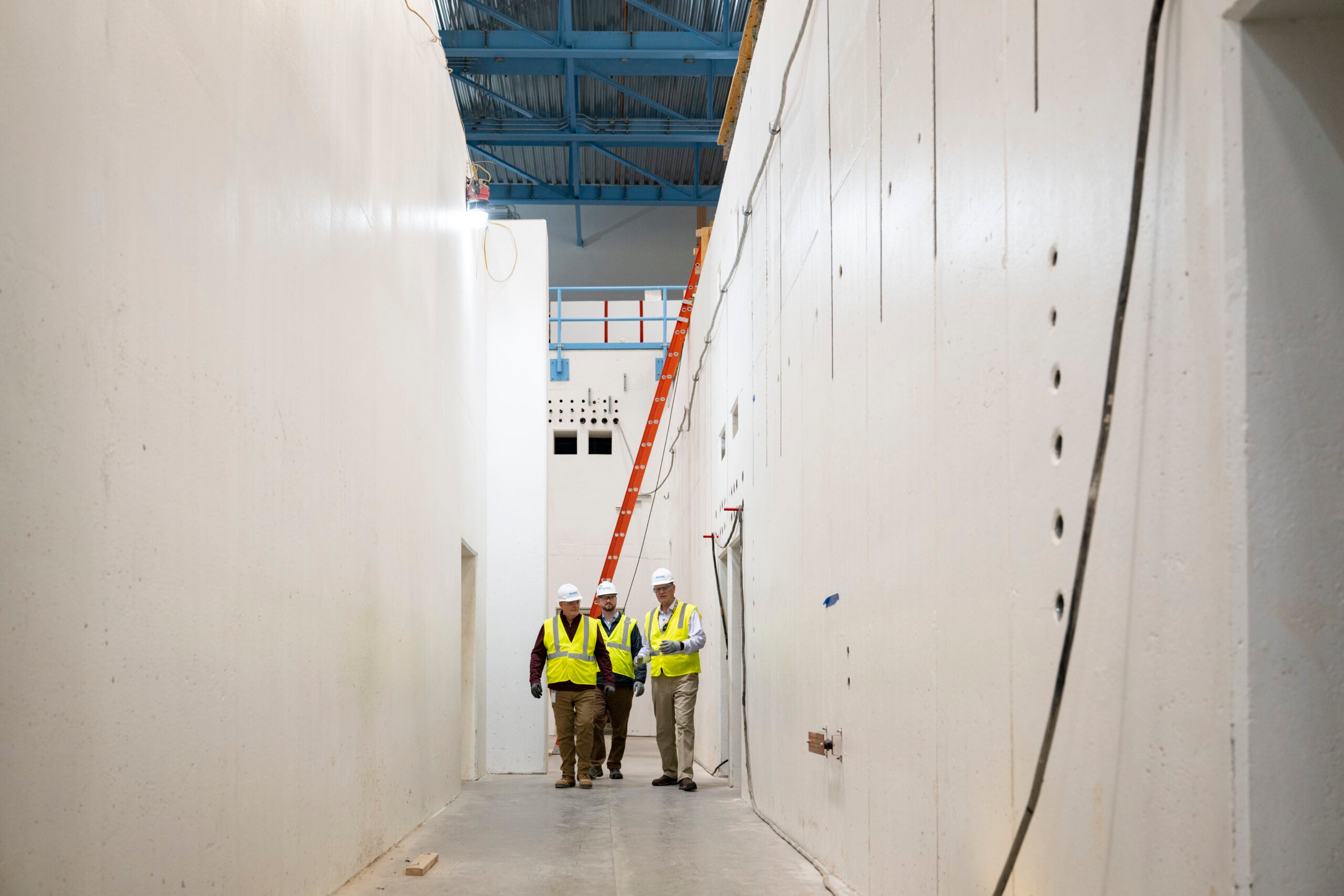
Image: WPR
Imagine needing a life-saving medical isotope, only to find the supply chain has hit a wall. For years, this has been a quiet crisis in nuclear medicine. But what if I told you the solution, at least for some of these complex challenges, is being pioneered right here in Wisconsin? It's not about faster trucks or bigger warehouses; it's about harnessing a different kind of power – fusion technology – to stabilize a critical supply chain.
The Nuclear Medicine Bottleneck: More Than Just Isotopes
The world of nuclear medicine relies on a constant, dependable flow of radioactive isotopes for diagnostics and treatment. These aren't your everyday commodities. Their production is highly specialized, their shelf-life is often measured in hours or days, and their transport requires stringent safety protocols. This inherent complexity makes the supply chain incredibly fragile. A disruption at any point – from production facility downtime to transportation issues – can have immediate and serious consequences for patient care. Think about the ripple effect: delayed diagnoses, treatment interruptions, and increased anxiety for patients and healthcare providers alike. For a Wisconsin company, the challenge was clear: find a way to make this vital chain more resilient.
Fusion's Unlikely Role in Medical Supply
When you hear 'fusion technology,' your mind might immediately jump to clean energy or advanced physics experiments. But the company highlighted in the WPR article is applying this cutting-edge science to a very different, yet equally critical, problem: the supply of materials needed for nuclear medicine. Their approach, as reported, involves using fusion technology to produce or process key components. This isn't about large-scale fusion reactors for power grids; it's about leveraging the precise capabilities of controlled fusion processes. For instance, the technology might be used to generate specific isotopes or to purify materials with a level of efficiency and accuracy that traditional methods struggle to match. This kind of innovation can bypass some of the traditional limitations, reducing reliance on geographically concentrated production sites or volatile transportation routes.
A Case Study in Precision and Resilience
Let's consider a mini case study: the production of Molybdenum-99 (Mo-99), a precursor to Technetium-99m, which is used in millions of diagnostic imaging procedures annually worldwide. The traditional production of Mo-99 often involves aging research reactors, and supply disruptions have been a recurring problem, leading to critical shortages. If a company can use fusion-based methods to create or refine these essential medical materials more reliably, perhaps even on-site or closer to distribution hubs, they can significantly de-risk the supply chain. This translates to fewer 'stock-outs' and a more stable supply for hospitals and clinics. It's about moving from a reactive posture, scrambling to fill gaps, to a proactive one, building inherent resilience into the very fabric of production and processing.
Lessons for Wausau Businesses: Diversification is Key
While the technology itself is highly specialized, the underlying principle is a powerful lesson for any business, including those here in Wausau. Supply chain resilience is no longer a 'nice-to-have'; it's a 'must-have.' This Wisconsin company's approach highlights the value of exploring unconventional solutions. It's about asking: 'What's the core problem we're trying to solve?' and then 'What tools, even seemingly unrelated ones, can help us achieve that?' For manufacturing firms, it might mean looking at advanced materials or novel manufacturing processes. For retail, it could be integrating predictive analytics with smarter inventory management. The key is to not get stuck in thinking that the only way to improve a supply chain is by tweaking existing methods. Embracing new technologies, even if they originate from entirely different fields, can unlock significant improvements in efficiency, reliability, and cost-effectiveness. This drive for innovation is what keeps Wisconsin businesses competitive.
The Future of Supply Chains: Innovation Beyond Expectations
The story of this Wisconsin company using fusion technology for nuclear medicine supply chains is a compelling example of how innovation can emerge from unexpected places. It underscores the importance of looking beyond traditional solutions and embracing the transformative potential of advanced technologies. As an IT professional with over 20 years of experience and certifications in Microsoft Azure, I see parallels in how robust IT infrastructure, cloud solutions, and data analytics can also build resilience and efficiency into any business's operations. Whether it's optimizing logistics, ensuring data security, or automating processes, the underlying goal is always to create a more robust and reliable system. If your business is facing its own supply chain challenges or looking to innovate, let's connect and explore how tailored IT solutions can make a difference.
Ready to fortify your business's operational backbone? Explore how our tailored IT solutions can bring resilience and efficiency to your enterprise. Learn more about our services or get in touch today.
20+ years in IT systems, automation, and full-stack development. Learn more →