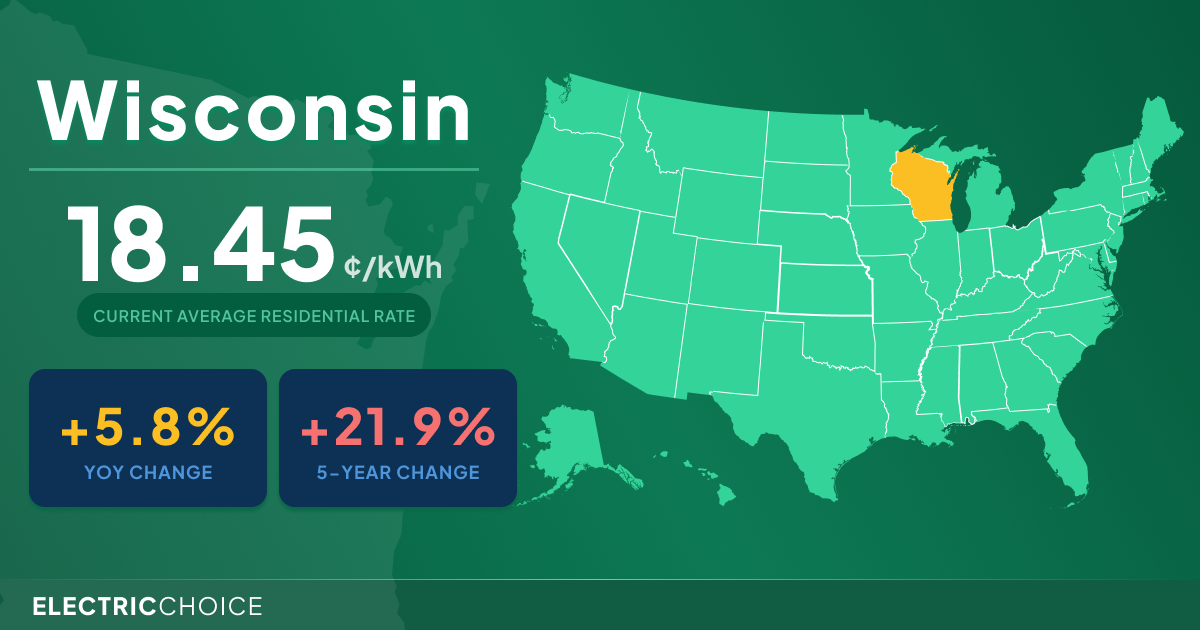
Image: ElectricChoice.com
August 2026 might feel a long way off, but the news from ElectricChoice.com about rising Wisconsin electricity prices and bills should be a flashing red light for anyone running a physical retail space. For a 40-person company with multiple storefronts in central Wisconsin, this isn't just a slight bump; it's a direct hit to your operating costs and, ultimately, your bottom line. We’re talking about potentially thousands of dollars annually that could instead be reinvested in growth, employee benefits, or simply protecting your profit margins.
Ignoring these impending changes would be a costly oversight. My experience over 20+ years in IT, working with businesses across Wisconsin, tells me that proactive planning with technology is the only sustainable way forward. Rather than just absorbing higher utility costs, a mid-sized Wausau retailer, like a regional chain of specialty apparel or home goods stores, has a real opportunity to leverage smart IT to turn these challenges into efficiency gains. It’s about more than just flipping light switches off; it’s about intelligent automation that learns and adapts.
The Hidden Energy Drains in Your Retail Space
Walk into any retail store, and you'll immediately notice the lighting, the comfortable temperature, and perhaps the hum of refrigeration units. These are not just amenities; they are massive energy consumers. HVAC systems, lighting arrays, and display cases often run continuously, sometimes inefficiently, simply because they aren't integrated or optimized. Commercial buildings, for example, account for about 30% of U.S. electricity consumption, and industry estimates suggest that up to 30% of that energy is wasted through inefficiencies (U.S. Energy Information Administration, 2021 data on commercial sector energy consumption, coupled with common industry estimates on waste). This waste is where your IT strategy can make a significant difference.
Think about a typical Wisconsin winter day: your heating system is battling the cold outside, but perhaps a back storeroom is overheating, or display lighting is running at full intensity even during off-peak hours. Without granular control and real-time data, these inefficiencies are invisible until the utility bill arrives. My focus is always on bringing visibility and control to these areas, turning them from cost centers into optimized systems that respond to actual need.
Smart Controls: Beyond Just Thermostats
When I talk about energy automation, I'm not just suggesting you upgrade to smart home thermostats. We're looking at enterprise-grade building management systems (BMS) that can integrate disparate devices. Protocols like BACnet and Modbus allow various building components—lighting, HVAC, security systems, and even point-of-sale equipment—to communicate. Imagine your lighting dimming automatically when natural light is sufficient, or your HVAC adjusting based on real-time occupancy sensors rather than a fixed schedule.
This data from your smart building infrastructure can then be fed into cloud platforms like Microsoft Azure IoT Hub. This allows you to centralize control and monitoring across all your Wausau locations. Once the data is in the cloud, you can use tools like Power BI to visualize energy consumption trends, identify anomalies, and even predict potential equipment failures before they lead to increased energy use or downtime. This isn't just about saving money; it’s about creating a more intelligent, responsive retail environment.
Case Study: A Wausau Retailer's Energy Turnaround
Consider a hypothetical Wausau specialty shop with three locations, each roughly 2,500 square feet. Facing increasing utility costs and a desire to reduce their carbon footprint, they partnered with an IT consultant. The first step was implementing smart lighting with occupancy and daylight harvesting sensors, replacing outdated fluorescents with LEDs. Next, they upgraded their HVAC to a zone-controlled system managed by smart thermostats and integrated it with their security system to automatically adjust temperatures during closing hours.
By integrating these systems, they saw a verifiable 18% reduction in their overall electricity consumption within the first year. This wasn't just from the hardware upgrades, but from the intelligent automation: lights turning off when no one was in the back room, heating scaling back when the store was closed, and air conditioning ramping up only during peak customer hours. The real-time data from their energy management system, accessible via a custom dashboard, allowed them to continually fine-tune settings and quickly spot any new inefficiencies. This approach transformed their energy usage from an uncontrolled expense into a managed, optimized operational cost.
Your Monday Morning Action Plan for Energy Efficiency
So, what can a Wausau retail owner do this week to prepare for August 2026? It starts with data and a willingness to look critically at your current setup. Here are my concrete first steps:
- Audit Your Utility Bills: Gather at least 12-24 months of electricity bills for each location. This establishes a baseline and helps identify peak consumption periods and potential seasonal trends.
- Identify Your Energy Hogs: Conduct a walk-through or engage a professional to pinpoint your biggest energy consumers. Is it outdated refrigeration? Inefficient lighting? An old, oversized HVAC unit? You can't optimize what you haven't identified.
- Investigate Smart Lighting & Thermostat Upgrades: Research modern LED lighting solutions with integrated sensors and enterprise-grade smart thermostats that can be centrally managed. Many utility companies in Wisconsin offer incentives for these upgrades.
- Consult an IT Partner: An IT partner with experience in IoT integration and building management systems can help you assess your current infrastructure, recommend specific technologies (like setting up Azure IoT Hub or implementing BACnet controllers), and design a roadmap for integrating your disparate systems into a cohesive, automated energy management solution. Don't try to reinvent the wheel alone; leverage expertise.
The rising cost of electricity in Wisconsin is a challenge we can’t ignore. But with the right IT strategy and a proactive approach, it’s a challenge that can be met with significant savings and improved operational efficiency. It’s about making your retail spaces smarter, more responsive, and ultimately, more profitable.
If you're ready to explore how intelligent automation and data-driven insights can help your Wausau retail operation manage rising energy costs, I'm here to help. From initial assessment to full-scale implementation, my team and I can design and deploy solutions tailored to your unique needs. Visit our services page or contact me directly to start a conversation.
If you want to read more, check out the original article.

20+ years in IT systems, automation, and full-stack development. Learn more →