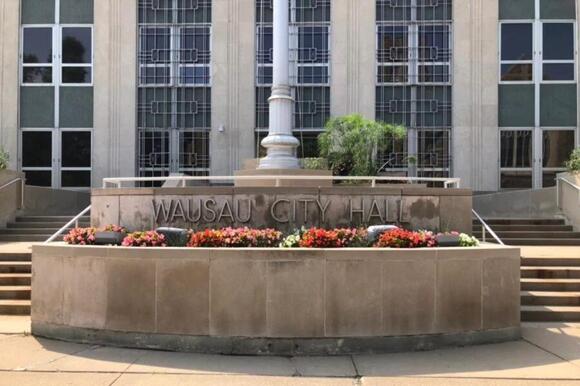
Image: newsbreak.com
The Wausau committee is currently weighing the Wangard riverfront agreement, and a critical detail has emerged: the safeguard threshold for the project sits above the developer’s own projections. On the surface, this might seem like big-picture city planning, but for local firms in central Wisconsin, this discrepancy in financial forecasting carries a significant lesson. If even major developers and city planners can have differing views on future performance, how confident are you in your own project timelines and revenue projections?
For a 40-person Wausau company, whether you're a subcontractor hoping to bid on parts of this development, a service provider eyeing new customers in a revitalized area, or a retail operation considering expansion, these kinds of forecasting variances can directly impact your bottom line. It’s not just about the riverfront; it’s a vivid reminder that relying solely on intuition or basic spreadsheets for your future planning is a substantial risk. What this means for your firm is a clear call to action: leverage predictive analytics and AI to sharpen your own internal forecasting, mitigate risks, and seize opportunities.
The Challenge of Projecting Outcomes in a Dynamic Market
Forecasting success for any large-scale endeavor, let alone a multi-year urban development, is inherently complex. Market fluctuations, material costs, labor availability, and unforeseen delays all conspire to make accurate predictions difficult. The news regarding the Wausau riverfront agreement underscores this reality, where a committee's cautious safeguard threshold points to a higher bar for success than the developer's initial outlook. This isn't necessarily a failure on anyone's part, but rather a reflection of the myriad variables that influence long-term project viability.
Traditional methods often struggle to account for the interplay of these dynamic factors. A static financial model built on assumptions from last year might quickly become obsolete. What we need are systems that can learn from historical data, identify patterns, and adjust predictions in real-time as new information becomes available. This is where modern predictive AI capabilities truly shine, offering a robust alternative to manual guesswork.
Sharpening Your Edge with Predictive AI in Project Management
Moving beyond basic spreadsheets, predictive AI allows Wausau firms to build more accurate models for everything from project timelines and resource allocation to cash flow and profitability. Instead of just reacting to events, you can anticipate them. For example, consider a Wausau-based HVAC contractor looking to secure a significant portion of the riverfront development. Bidding on such a project requires not only accurate cost estimation but also precise forecasting of material lead times, labor availability, and potential delays due to other trades.
By integrating tools like Microsoft Project Online with Power BI for advanced visualization and even Azure Machine Learning for custom predictive models, this contractor could analyze historical project data – past material costs, typical installation times, seasonal labor fluctuations – to generate more reliable bids and timelines. Specialized construction project management software like Procore, for instance, offers robust reporting and analytics features that, when fed with good data, can highlight potential cost overruns or schedule slips well in advance. According to a report by McKinsey & Company, deploying advanced analytics and AI can reduce project delays by up to 30% (McKinsey, 2020).
Beyond the Build: Mitigating Risk and Uncovering Opportunities
The lessons from the riverfront agreement extend beyond just construction. Any local firm dependent on the success or timeline of a large community project can benefit from better forecasting. For a professional services firm, predictive models could help forecast future demand for legal or accounting services as new businesses emerge from the development. For a retail operation, it might mean more accurately predicting foot traffic and sales volumes based on project milestones and demographic shifts.
Predictive AI also enhances risk management. By simulating various scenarios – what if material costs jump 10%? What if the project is delayed six months? – you can proactively develop contingency plans. This proactive stance isn't about avoiding risk entirely, but about understanding its potential impact and positioning your firm to adapt quickly, turning potential pitfalls into manageable challenges or even new opportunities. It helps you understand what that 'safeguard threshold' truly means for your own operation.
Your Monday Morning Action Plan for Predictive Foresight
So, what can your Wausau firm do this week to improve its predictive capabilities? You don't need to be a data scientist to start. Here are some concrete first steps:
- Assess Your Current Tools: Are you still relying heavily on Excel for project tracking and financial projections? If so, it’s time to explore more robust options.
- Embrace Cloud-Based Project Management: Look into platforms like Microsoft Project Online, Asana, or industry-specific solutions like Procore for construction. These often come with integrated reporting and analytics capabilities.
- Leverage Existing Data: Start by centralizing your historical project data, financial records, and operational metrics. Even raw data is valuable for a future predictive model.
- Explore Business Intelligence (BI) Tools: Tools like Microsoft Power BI or Tableau can help you visualize your data and uncover trends that inform better forecasts without needing complex AI models right away.
- Consider Small-Scale Predictive Modeling: For those ready to dip their toes into AI, explore basic forecasting functions within BI tools or consider a pilot project using Azure Machine Learning with expert guidance to build a custom model for a specific challenge, like predicting project completion rates or resource needs.
The future of Wausau's riverfront development, like any significant project, holds both promise and uncertainty. By proactively integrating predictive AI and advanced analytics into your firm's operations, you're not just preparing for what's next; you're actively shaping your own success within our dynamic Wisconsin economy.
If you're ready to explore how predictive analytics and AI can transform your firm's forecasting and risk management, I'm here to help. Contact me today to discuss how we can implement practical IT solutions tailored to your unique needs. Visit my services page or reach out directly.
If you want to read more, check out the original article.

20+ years in IT systems, automation, and full-stack development. Learn more →